Core Service Problem-Solving
Overcoming Caliche Soil in the Sonoran Desert: Jackhammering and Drainage Solutions
By the YardGuy4Hire crew·September 16, 2024·8 min read
Licensed, insured desert landscapers serving Mesa & the Valley since 2018.
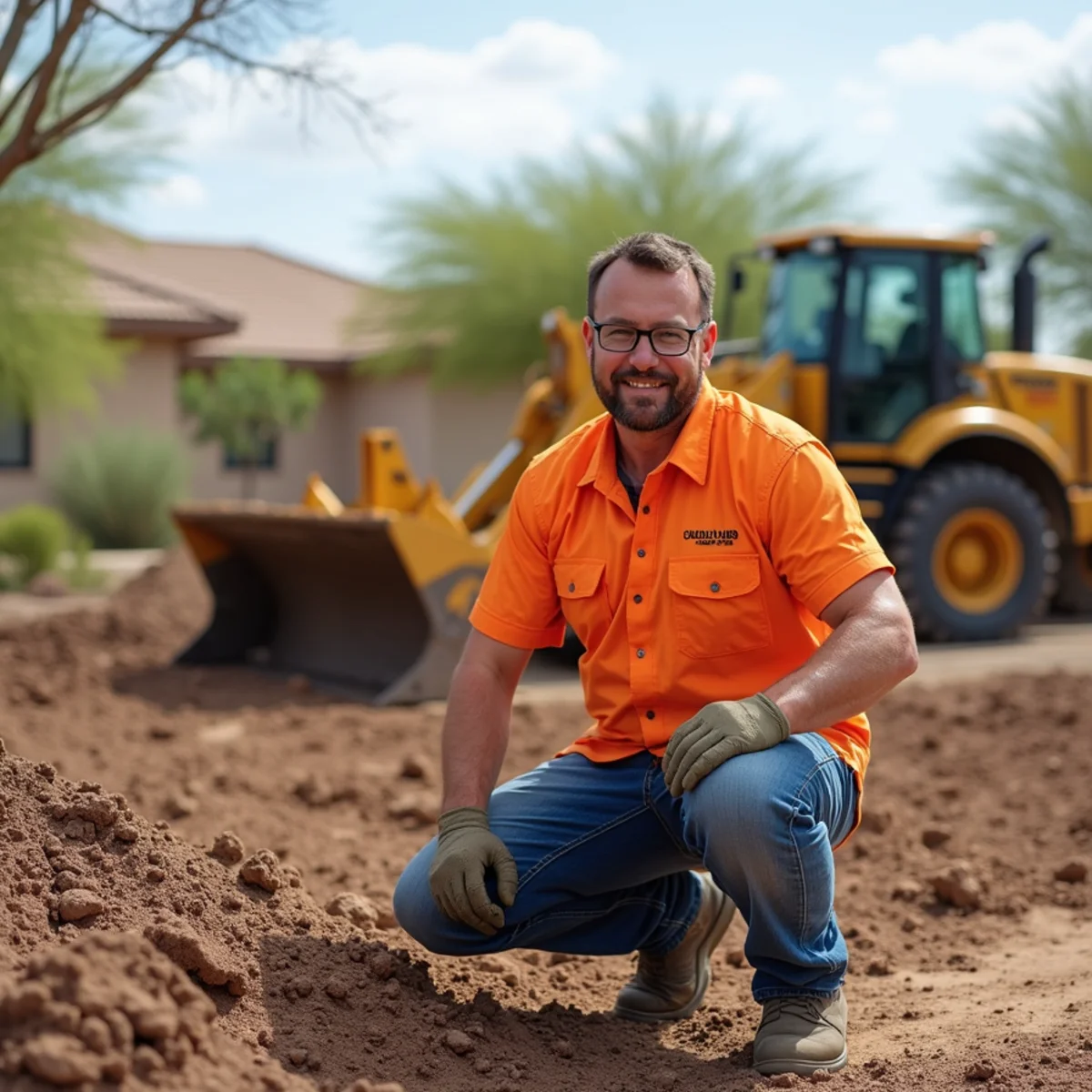
What caliche is, why it's such a problem for planting and drainage in Mesa and Apache Junction yards, and the real methods used to work around it.
If you've ever tried to dig a planting hole in an East Valley yard and hit what feels like solid concrete two feet down, you've met caliche. This cemented layer of calcium carbonate is one of the defining challenges of caliche soil planting in Arizona, and it's the reason a huge number of new trees, shrubs, and irrigation lines fail within their first year — not because the plant was wrong for the climate, but because the hole they went into couldn't drain or let roots expand.
What Caliche Actually Is
Caliche forms over thousands of years as calcium carbonate dissolved in groundwater precipitates out and cements soil particles together, typically somewhere between 6 inches and several feet below the surface across much of Maricopa County. It can range from a soft, crumbly layer to a rock-hard sheet that genuinely requires mechanical breaking to get through. The depth and hardness vary block by block, sometimes even within the same yard, which is why two neighbors can have completely different planting experiences.
A quick way to check for caliche before planning a project: dig a test hole about 18-24 inches deep in a couple of spots around the yard. If you hit a hard, whitish layer that resists a shovel, you've found it, and it's worth planning around before committing to a planting or drainage design.
Why Caliche Causes So Many Problems
- It's essentially impermeable, so water that should drain away from a root ball instead pools inside the planting hole, effectively drowning the roots
- Roots can't penetrate it, which forces plants into a shallow, restricted root system that's more vulnerable to wind-throw and drought stress
- It interferes with irrigation trenching, often requiring extra excavation time and equipment that isn't accounted for in a basic quote
- It can create a perched water table just above the layer, which shows up as a soggy spot that never seems to dry out even without visible surface water
How Professionals Break Through It
1. Test Before You Commit
Before finalizing a planting plan or irrigation trench route, a few test holes tell you how deep the caliche sits and how hard it is. This single step prevents the common scenario where a homeowner plants an expensive tree, only to find out six months later that the root ball is sitting in a bathtub of trapped water.
2. Mechanical Breaking
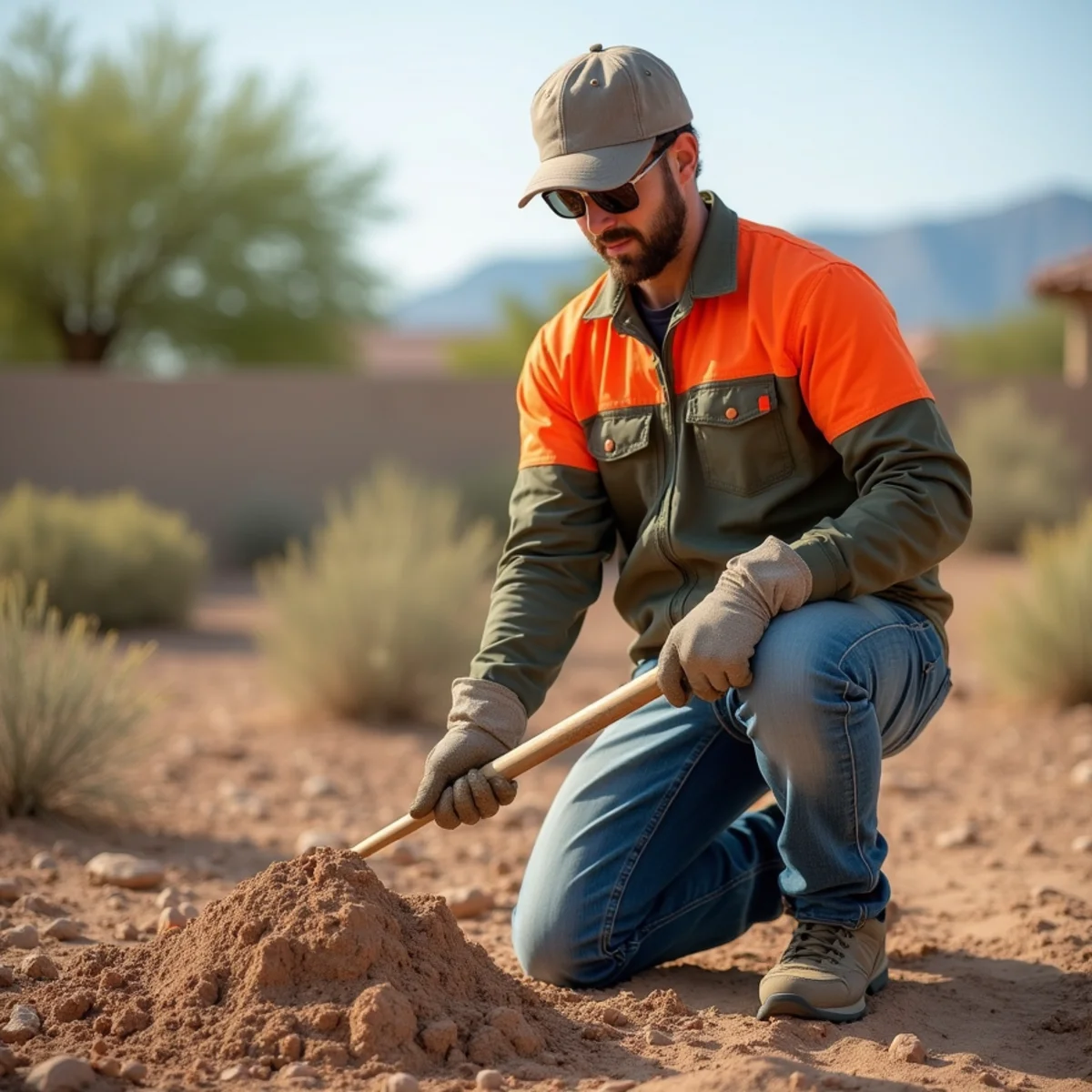
For genuinely hard caliche, a hand auger or shovel won't cut it — literally. Jackhammers, powered post-hole diggers with carbide bits, or in larger installations, an excavator with a hydraulic breaker attachment, are used to punch through the layer. For individual planting holes, the goal is usually to break through the caliche layer entirely or create a drainage chimney through it rather than just widening the hole above it.
3. Drainage Chimneys and Backfill Strategy
Once through the caliche, a common technique is drilling or breaking a narrow drainage channel below the planting hole so water has somewhere to go even if the main hole is wider. Backfilling with a soil mix that doesn't create a dramatic texture change between the hole and native soil also matters — an overly amended planting hole surrounded by hard caliche can actually make drainage worse by creating a bathtub effect at the boundary.
- Test-dig to confirm caliche depth and hardness
- Break or drill through the layer to establish drainage
- Backfill with a soil blend similar enough to native soil to avoid a drainage boundary effect
- Water-test the hole before planting to confirm it drains within a reasonable window (generally a few hours, not days)
- Select species genuinely suited to the site's real drainage conditions, not just desert-adapted in general
Drainage Solutions Beyond Individual Planting Holes
Caliche doesn't just affect single trees — it affects whole-yard drainage. If a large section of your property sits on a shallow caliche shelf, surface grading and area drains become even more important, since water can't percolate down the way it would in more open soil. This is a major reason some East Valley yards flood or develop soggy low spots even without an obvious grading mistake; the water simply has nowhere to go once it hits the caliche layer.
If multiple planting areas in your yard stay soggy for days after watering, or if trees seem to be struggling despite correct irrigation, caliche-related drainage is one of the first things worth investigating before assuming it's a plant health or irrigation timing issue.
Get a Site Assessment Before You Plant
Caliche is manageable, but only if it's identified and planned around before plants go in the ground. YardGuy4Hire handles caliche breaking, drainage chimney installation, and desert landscape planting throughout Mesa and Apache Junction as part of our desert landscape maintenance and installation work. Call (323) 606-0255 for a site assessment before your next planting or landscaping project.
How YardGuy4Hire can help
Frequently Asked Questions
How do I know if my yard has a caliche problem?
The clearest sign is hitting a hard, resistant layer when digging a hole roughly 18-30 inches down. Soggy spots that never fully dry out and struggling new plants despite proper watering are also common indicators.
Can caliche be dug through with a regular shovel?
Soft caliche sometimes can, with effort, but hard caliche genuinely requires mechanical tools like a jackhammer, carbide-tipped auger, or excavator attachment. Attempting to force through hard caliche by hand is a common source of frustration and injury.
Does every yard in Mesa have caliche?
No, it varies significantly by location and even within the same neighborhood. Some lots have caliche just a foot or two down, while others have little to none within normal planting depth.
Will amending the soil in a planting hole fix a caliche drainage problem?
Not on its own. If the caliche layer beneath the hole is intact, amended soil above it can still create a bathtub effect that traps water. The caliche layer itself typically needs to be broken or drained through.
Does caliche affect irrigation installation, not just planting?
Yes, trenching for irrigation lines through caliche takes more time and sometimes different equipment, which is worth discussing with your contractor before finalizing a quote for a new irrigation system.
Trusted Arizona Resources
For water, drought, plant, and licensing guidance, we point Mesa homeowners to the same authoritative sources we rely on:
Need a hand from a local pro?
YardGuy4Hire is a licensed, insured, family-run crew serving Mesa and the whole Valley. Call for a free, honest estimate.
(323) 606-0255