Local-Specific Angles
Navigating Sonoran Desert Soil Types: Caliche Hardpan, Sand, and Salt Accumulation
By the YardGuy4Hire crew·November 25, 2024·8 min read
Licensed, insured desert landscapers serving Mesa & the Valley since 2018.
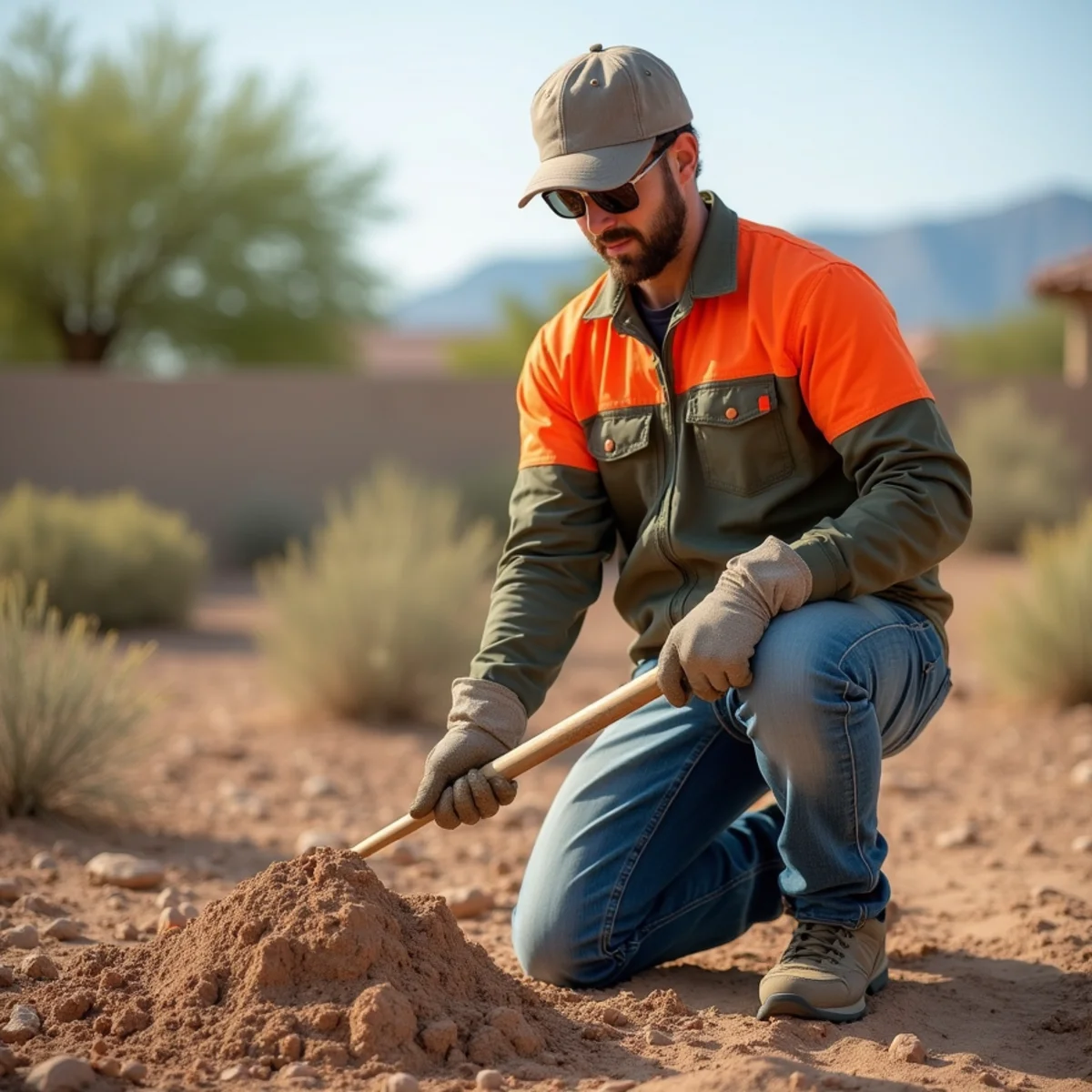
A homeowner's guide to the range of soil conditions found across Maricopa County — caliche hardpan, loose sand, and salt accumulation — and how each affects landscaping choices.
Arizona desert soil landscaping isn't a one-size-fits-all conversation, because Maricopa County actually has a surprising range of soil conditions depending on where you are — from loose, fast-draining sand in some areas to dense caliche hardpan just below the surface, plus salt accumulation issues in older, heavily irrigated neighborhoods. Knowing which condition (or combination) you're dealing with changes everything from what plants will thrive to how your irrigation system should be designed.
The Three Conditions Homeowners Run Into Most
1. Caliche Hardpan
Caliche is a cemented layer of calcium carbonate that can sit anywhere from a few inches to several feet below the surface. It's essentially impermeable, which means water pools above it instead of draining through, and plant roots can't penetrate it without mechanical intervention. This is common throughout much of the East Valley, including large parts of Mesa, Gilbert, and Apache Junction, though depth and hardness vary block by block.
2. Loose, Fast-Draining Sand
In some areas, especially closer to washes and certain parts of Goodyear and the West Valley, soil is dominated by sandy material that drains quickly, sometimes too quickly for plants that need consistent moisture at the root zone. This soil type has the opposite problem from caliche: instead of water pooling, it drains away before roots can absorb it, which means more frequent, shorter irrigation cycles typically work better than the deep, infrequent watering that suits clay-heavy or caliche-affected soil.
3. Salt Accumulation
Arizona's water supply carries dissolved minerals and salts, and in yards that have been irrigated the same way for many years, especially with shallow, frequent watering, those salts can accumulate in the topsoil faster than rainfall (which is minimal here) can flush them back down. Salt buildup shows up as stunted growth, leaf burn at the edges, and a white, crusty residue on the soil surface, and it's a common issue in older, established Maricopa County neighborhoods.
If you're seeing white crusty deposits on your soil surface along with plants that seem to struggle despite adequate watering, salt accumulation is worth investigating before assuming it's a pest or disease issue.
How to Identify What You're Dealing With
- Dig a few test holes 18-24 inches deep in different areas of the yard to check for a caliche layer
- Note how quickly water disappears after a deep watering — very fast drainage suggests sandy soil, water that lingers for a day or more suggests caliche or heavy clay
- Look for white surface crust or plant leaf burn concentrated at the edges, both signs of salt accumulation
- Check whether problem areas correlate with older, established irrigation zones versus newer plantings
Landscaping Strategies for Each Condition
Working With Caliche
- Break through the layer for individual planting holes rather than planting on top of it
- Install drainage chimneys where caliche can't be fully removed across a wider area
- Select species tolerant of the specific drainage conditions once tested, not just generically desert-adapted
Working With Sandy, Fast-Draining Soil
- Shift to shorter, more frequent drip irrigation cycles rather than deep, infrequent watering
- Add organic matter or a soil amendment at planting time to improve moisture retention around new root systems
- Choose species genuinely tolerant of fast-draining conditions, since even desert plants vary in their preference here
Managing Salt Accumulation
- Periodically leach the soil with a deep, slow watering that pushes accumulated salts below the root zone rather than always doing shallow, frequent cycles
- Improve drainage so leached salts can actually move down and away rather than pooling and re-concentrating
- Choose salt-tolerant plant species for areas where accumulation is an ongoing, hard-to-fully-resolve issue
Leaching salts requires water to actually drain away from the root zone — if the same yard also has a caliche layer trapping water, the salt problem and drainage problem need to be solved together, not separately.
Why a Site-Specific Assessment Matters
Because these three conditions can appear individually or in combination within the same property, and even vary between the front and back yard, a generic desert landscaping plan pulled from a national guide often misses the specific challenge in your soil. A proper assessment — test holes, drainage checks, and a look at your irrigation history — gives a much more reliable foundation for plant selection and irrigation design than guessing based on what worked for a neighbor a few streets over.
Get a Soil-Informed Landscaping Plan
YardGuy4Hire has worked across the full range of Maricopa County and Goodyear soil conditions, from hard caliche to loose sand to salt-affected older neighborhoods, and we build our maintenance and installation plans around what your specific yard actually needs. Call (323) 606-0255 for a site assessment before your next planting or irrigation project.
How YardGuy4Hire can help
Frequently Asked Questions
How do I tell the difference between caliche and just hard, dry native soil?
True caliche is genuinely cemented and resists a shovel even when moist, not just dry and compacted. A test hole after watering the area helps distinguish the two — hard-but-diggable soil will soften with water, caliche generally won't.
Can salt accumulation be fully fixed, or is it an ongoing issue?
In many established yards it's an ongoing management issue rather than a one-time fix, especially if irrigation water naturally carries dissolved minerals. Periodic deep leaching and good drainage keep it manageable.
Does sandy soil need less irrigation since it's 'looser' than caliche-affected soil?
Actually the opposite in terms of frequency — sandy soil typically needs more frequent, shorter watering cycles since water moves through it quickly, while caliche-affected soil holds water longer and needs less frequent cycles.
Is one part of Maricopa County more likely to have caliche than another?
It varies significantly even within neighborhoods, but caliche is broadly common across much of the East Valley including Mesa and Apache Junction, while soil composition can shift closer to washes and in parts of the West Valley.
Should I get a soil test before a new landscaping project?
For anything beyond a small planting, yes — a basic soil assessment (test holes, drainage checks) before design work starts prevents a lot of the plant failure and drainage problems we're called to fix after the fact.
Trusted Arizona Resources
For water, drought, plant, and licensing guidance, we point Mesa homeowners to the same authoritative sources we rely on:
Need a hand from a local pro?
YardGuy4Hire is a licensed, insured, family-run crew serving Mesa and the whole Valley. Call for a free, honest estimate.
(323) 606-0255