
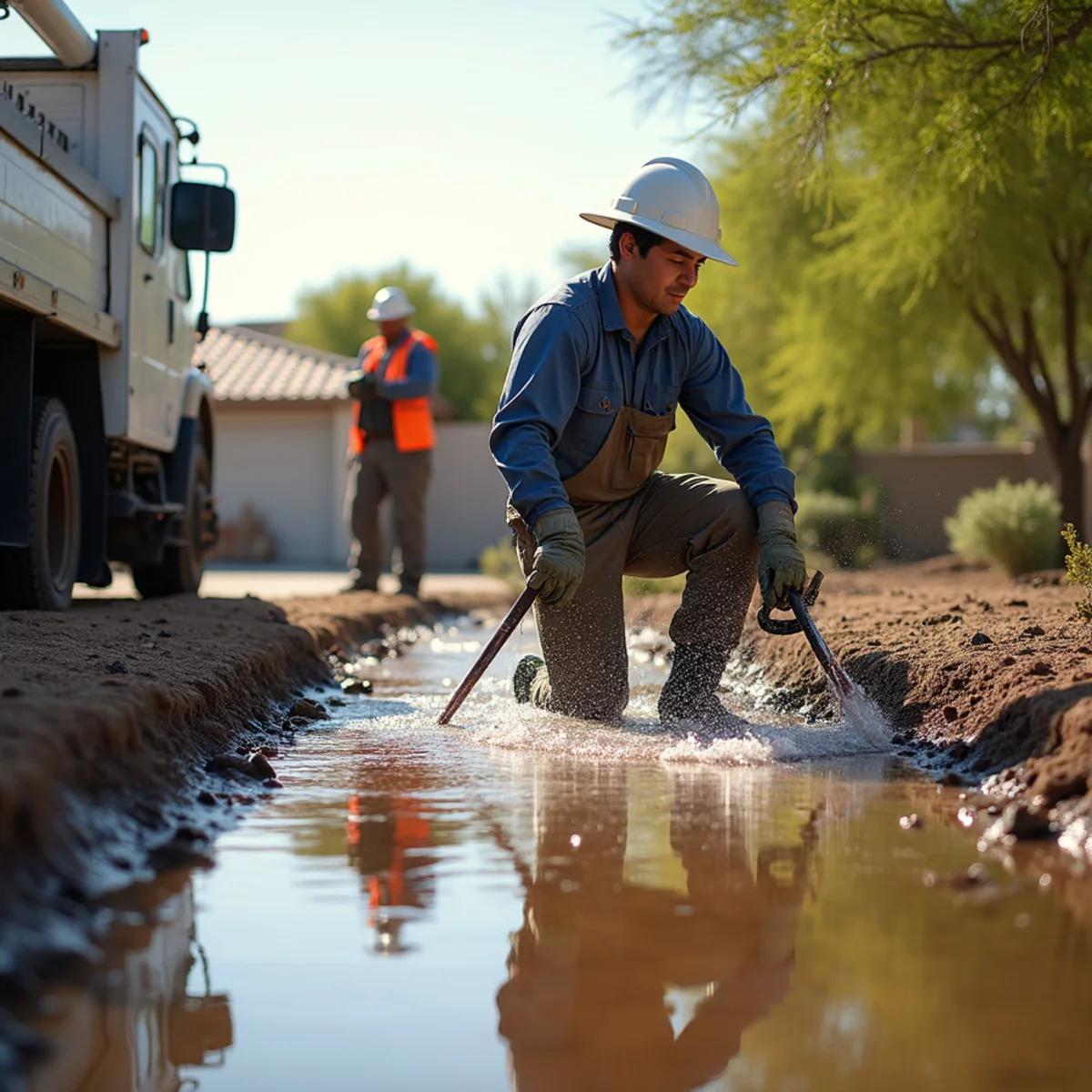
The main line is the pressurized pipe feeding your whole irrigation system, so when it fails the water doesn't stop between cycles — it runs continuously until someone shuts it off. A blown valve, a cracked main from ground movement or age, or a line severed by digging can dump hundreds of gallons an hour into your yard, erode the soil, saturate the base under patios and walls, and send your water bill through the roof. This is the irrigation problem that genuinely can't wait.
The first move is always to stop the flow. If you can, shut off the irrigation supply valve or the home's main; when you call, we'll walk you through finding it. Then we get on site, locate the break — which often means tracing a wet, bubbling, or sunken area back to the pressurized fault — and excavate carefully to expose the damaged section without wrecking the surrounding landscape.
From there we make a lasting repair, not a patch: replacing the failed valve or manifold, cutting out and re-coupling the damaged pipe with proper fittings, and pressure-testing the repair before we backfill. We check that the rest of the system held up under the failure, restore the grade and any disturbed rock or plants as best we can, and get you back to normal watering. If ground movement or old, brittle pipe caused the break, we'll tell you what to watch so it doesn't happen again.
Main line breaks spike noticeably during the transition weeks in and out of monsoon season, and it's not a coincidence. Mesa's clay-heavy caliche soil swells when it finally gets soaked after a dry spell and shrinks again as it dries out afterward, and that constant expansion and contraction puts real stress on rigid PVC fittings and glued joints buried in it. A line that survived years of stable, dry ground can crack the very same week the soil around it swells for the first time in months. When ground movement caused the break, we use couplings with a little flex instead of rigid glued fittings and avoid over-tightening joints at the clay-to-fill transition, where the next crack usually starts.
Signs of a main line or valve emergency
- Water running continuously even with the timer off
- A geyser, bubbling, or fast-spreading wet area in the yard
- A sudden, dramatic drop in system pressure
- Water pooling against the foundation, patio, or wall
- A valve box overflowing or a cracked manifold
- A shocking spike in your water bill
Our Process
- 1
Stop the flow
We help you shut off the supply immediately by phone, then head out to stop the loss and protect your foundation.
- 2
Locate the break
We trace the pressurized fault — often a bubbling or sunken wet area — and pinpoint the failed section or valve.
- 3
Excavate & repair
We carefully expose the damage and make a lasting repair with proper pipe, couplings, or a new valve/manifold.
- 4
Test & restore
We pressure-test the fix, confirm the system holds, backfill, and restore the grade and disturbed landscape.
What's Included
- Phone guidance to locate and shut off your supply valve
- On-site tracing of the pressurized break to its exact source
- Careful excavation that limits damage to surrounding landscape
- Valve, manifold, or pipe replacement with proper couplings and fittings
- Pressure-testing the repair before backfilling the trench
- Grade and disturbed rock or plant restoration after backfill
Why homeowners pick us
- True 24/7 emergency response
- Phone guidance to stop the flow immediately
- Lasting repairs, pressure-tested before backfill
- Foundation-protecting fast action
What affects your price
- Depth of the line and difficulty of excavation
- Whether it's a pipe break, valve blowout, or manifold failure
- Length of line and number of fittings to replace
- Time of dispatch for after-hours emergency response
- Landscape restoration over the repair area
You get a firm, itemized written estimate after we see the property — design, prep, materials, labor, disposal, and warranty on separate lines so you can compare bids item by item. No fake prices, no surprises.
Why Homeowners Choose YardGuy4Hire for This
- True 24/7 dispatch because a main line runs until stopped
- Licensed and insured irrigation repair crew serving Mesa since 2018
- 100% satisfaction guarantee on every pressure-tested main line repair
- Honest, itemized quote before excavation, no surprise add-ons after
Pro Tips From Our Crew
A few things we've learned keeping Mesa yards healthy — whether you hire us or tackle it yourself:
- Check your water meter's small leak-indicator dial after shutting the irrigation valve — if it's still spinning, the leak is on the house side of the meter, not the irrigation main itself.
- If a main line break sits near a paver patio or wall footing, act fast — sustained saturation can wash out the compacted base underneath and cause the hardscape to settle within days.
- After we backfill a main line repair, keep vehicles off that section of yard for about a week — freshly disturbed, saturated soil compacts unevenly and can leave a dip that reopens the seam.
- Homes built in Mesa before the 1980s sometimes ran galvanized steel mains instead of PVC — it corrodes from the inside out, not a visible crack, so it can look fine until it bursts.
- After a main line repair, run every zone individually — the pressure surge from a break often stresses a second weak point elsewhere that only shows up under full flow.
Related Services
Irrigation Valve & Sprinkler Timer Repair
Emergency Yard Flood Drainage & Water Pumping
Drip System Conversion & Water Conservation