
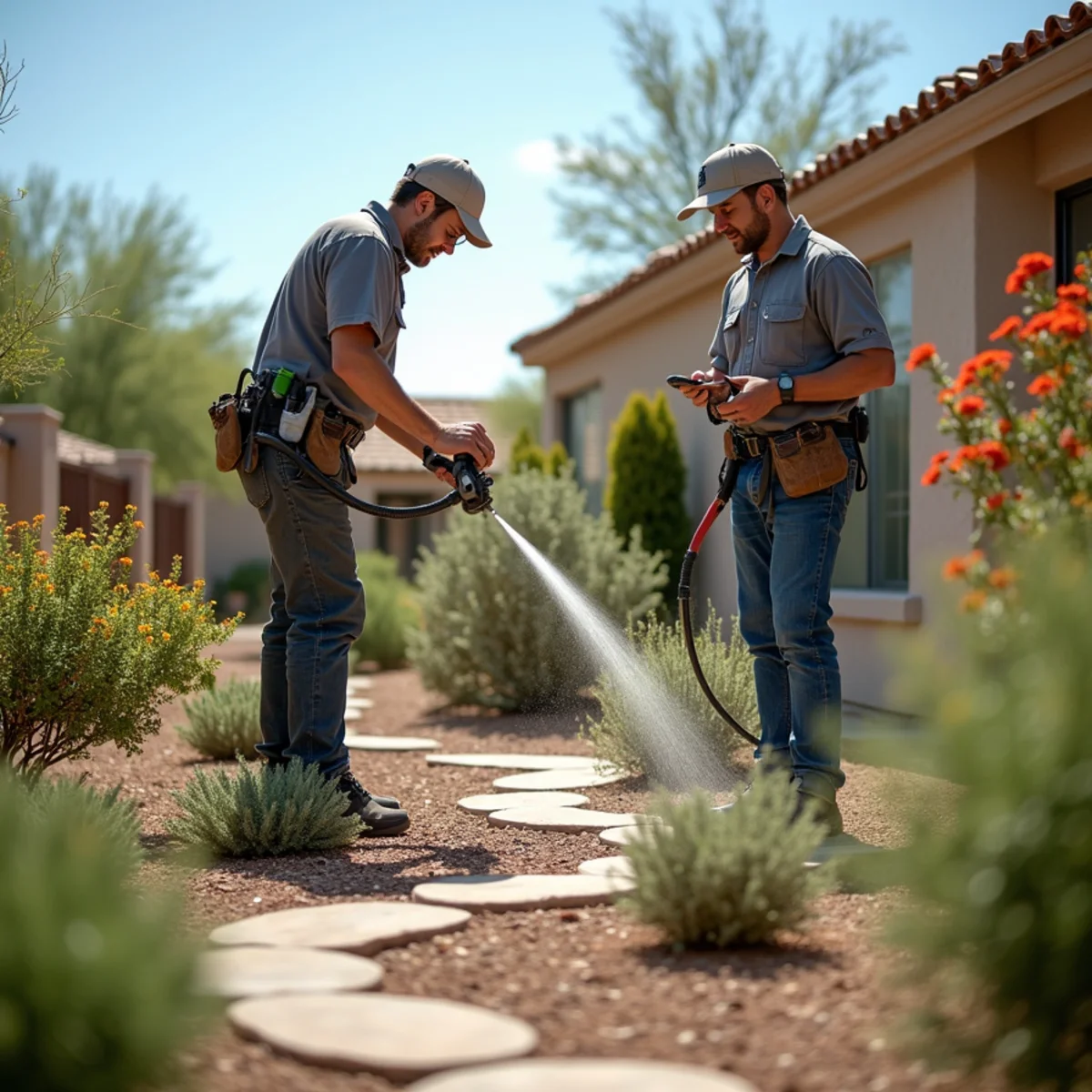
In a climate this hot and dry, how you water is as important as how much. Overhead spray loses a large share of every gallon to evaporation and wind and soaks gravel that doesn't need it, while drip irrigation delivers water slowly at the base of each plant, where it actually reaches the roots. Converting thirsty spray zones to a properly designed drip system is one of the highest-return upgrades a desert yard can get — lower bills, healthier plants, and far less waste.
A conversion is more than swapping heads. We cap or remove the old spray zones, run poly drip line to each plant, size emitters to plant type and maturity so a young shrub and a mature tree each get the right amount, and set the whole thing up in sensible hydrozones. We pair it with a properly programmed or smart controller that waters deeply and less often, which builds stronger roots than the frequent shallow cycles most old timers run. For bigger savings we can pair the drip conversion with a xeriscape retrofit — grouping plants by water need, adding low-water desert species, and finishing in decorative rock.
Water conservation here also comes with money on the table. Many Valley water providers and cities offer rebates for converting grass to low-water landscape and for smart irrigation controllers. Programs and amounts change and each has its own rules, so we'll point you to your provider's current rebate and design the project to fit the requirements — you confirm and file with your provider, and we build it to qualify. The result is a yard that costs less to run and looks better doing it.
A detail that gets skipped on budget drip conversions is UV-rated tubing where line runs across open ground instead of staying buried or shaded by mulch and rock. Standard black poly line left exposed on the surface in direct Arizona sun turns brittle and starts cracking at the emitter punctures within two or three summers, well short of the decade-plus a properly buried or shielded system delivers, and by then the failures show up as one dead plant at a time rather than one obvious break. We bury main runs and keep exposed line to a minimum, using UV-stabilized tubing wherever line has to stay above grade, so its lifespan actually matches the years of savings we're promising.
Reasons to convert to drip & xeriscape
- A high summer water bill from spray irrigation
- Sprinklers watering rock, sidewalks, and the air
- Plants stressed by shallow, frequent watering
- Grass you want to replace with low-water landscape
- Wanting to qualify for a water provider rebate
- An outdated controller running the wrong schedule
Our Process
- 1
Water audit & design
We review your zones, plants, and bill, then design an efficient drip layout and hydrozones for the property.
- 2
Convert the zones
Old spray is capped or removed and poly drip line is run to each plant with emitters sized to plant type.
- 3
Smart control
We program a deep, infrequent schedule or install a weather-based smart controller to cut waste further.
- 4
Rebate-ready build
We build to your water provider's rebate requirements and point you to the current program to file.
What's Included
- Water audit reviewing current zones, plants, and your utility bill
- Old spray heads capped or removed zone by zone
- Poly drip line run to each plant with sized emitters
- Hydrozone grouping so plants with similar needs share a zone
- Deep, infrequent watering schedule programmed on the controller
- Build spec matched to your water provider's current rebate rules
Valley planning range
$1,500–$4,000 (drip system)
Valley planning range. Grass-to-xeriscape conversions run about $5–$15/sq ft; water-provider rebates may offset part of the cost. Not a quote.
Why homeowners pick us
- Water delivered to roots, not the air
- Lower bills and healthier, stronger plants
- Smart-controller upgrades available
- Designed to fit current rebate requirements
What affects your price
- Number of zones being converted and yard size
- Emitter count and drip line footage for plant density
- Whether a xeriscape retrofit and rock are included
- Controller upgrade to a smart/weather-based model
- Any grass removal tied into the conversion
You get a firm, itemized written estimate after we see the property — design, prep, materials, labor, disposal, and warranty on separate lines so you can compare bids item by item. No fake prices, no surprises.
Why Homeowners Choose YardGuy4Hire for This
- Licensed and insured irrigation crew converting Mesa yards since 2018
- Free water audit before we design or quote a conversion
- 100% satisfaction guarantee on every converted zone's coverage
- Honest rebate guidance without promising a specific dollar amount
Pro Tips From Our Crew
A few things we've learned keeping Mesa yards healthy — whether you hire us or tackle it yourself:
- Open the flush cap at the end of every drip zone once a year and run it until water clears — that clears sediment and mineral grit before it clogs individual emitters downstream.
- A drip conversion needs its own pressure-reducing valve — line pressure at the house runs far higher than drip emitters are rated for, and skipping it blows emitters off or waters the zone unevenly.
- Never add a plant to an existing drip zone without checking its water needs against that zone's schedule — a thirsty citrus tree sharing a valve with drought-tolerant natives ends up starving one.
- Apply for a water provider rebate before tearing out grass, not after — most programs require pre-approval or before-photos, and a conversion finished before you apply is often disqualified from the rebate entirely.
- An older anti-siphon valve built for spray heads doesn't always seal well at the lower flow rates a drip zone runs — check valve condition during a conversion, or the new system will leak.
Related Services
Irrigation Valve & Sprinkler Timer Repair
Gravel & Decomposed Granite Installation
Desert Landscape Maintenance & Weeding