Prevention & Maintenance
How to Inspect Saguaro and Prickly Pear Cacti for Bacterial Necrosis and Structural Lean
By the YardGuy4Hire crew·February 10, 2025·8 min read
Licensed, insured desert landscapers serving Mesa & the Valley since 2018.
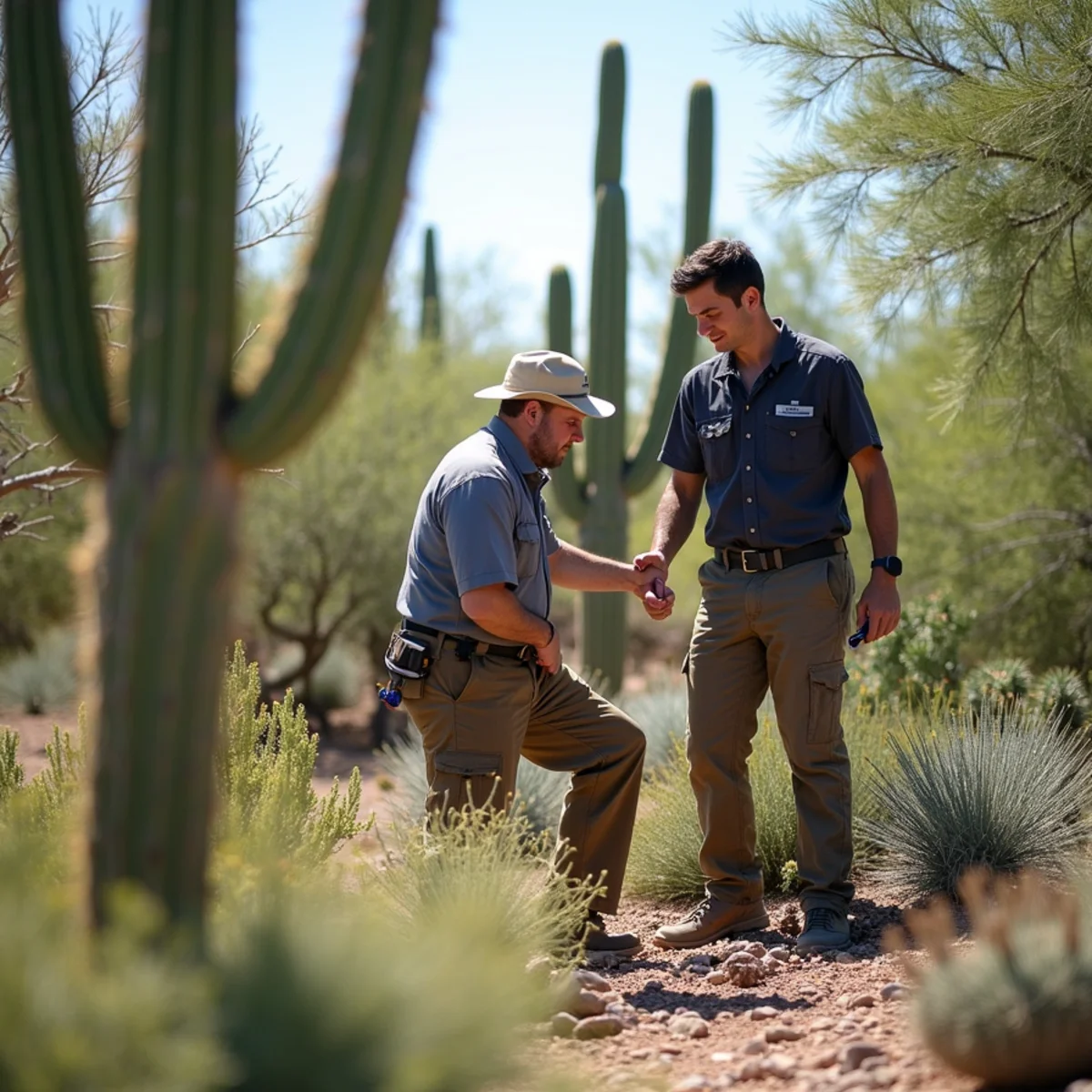
How to inspect saguaro and prickly pear cacti for early signs of bacterial necrosis and structural lean, before either becomes a safety hazard or plant loss.
A mature saguaro represents decades of growth, sometimes over a century, which is exactly why catching problems early through regular saguaro cactus disease inspection matters so much in Arizona. Bacterial necrosis and structural lean are the two issues most likely to turn a healthy, valuable saguaro into either a lost plant or, worse, a genuine safety hazard if a multi-ton cactus topples unexpectedly.
Understanding Bacterial Necrosis
Bacterial necrosis in saguaros (sometimes associated with certain Erwinia-type bacteria) causes internal tissue to break down, often starting from a wound, insect damage, or a spot where water has been sitting against the cactus skin. Left unaddressed, it can spread and eventually compromise the structural integrity of the whole plant, since a saguaro's rigidity depends on healthy internal tissue and its woody rib structure working together.
Early Signs to Look For
- A dark, water-soaked appearing spot on the skin, often with a distinct border between healthy and affected tissue
- A foul odor coming from the affected area, which is one of the more distinctive signs of active bacterial breakdown
- Soft, mushy tissue when gently pressed, compared to the firm feel of healthy saguaro skin
- Dark liquid seeping or oozing from a wound or lesion, sometimes running down the trunk
- Collapsed or sunken areas where the internal structure has already begun to break down
A small, dry, callused-over wound on a saguaro isn't automatically a problem — cacti naturally form protective callus tissue over minor injuries. The warning signs are wet, soft, foul-smelling, or actively spreading damage, not old healed scarring.
Common Entry Points for Infection
- Woodpecker or other bird damage creating cavities in the trunk
- Frost damage from an unusually cold winter, especially on younger or less-established saguaros
- Mechanical damage from nearby construction, vehicle contact, or careless equipment use during other yard work
- Areas where irrigation overspray consistently hits the trunk, since saguaros are adapted to minimal, infrequent moisture on their skin
Inspecting for Structural Lean
Saguaros can develop a lean for multiple reasons — uneven root development, soil erosion on one side, internal tissue damage weakening one section, or simply growing toward available light over decades. A slight, long-standing lean that hasn't changed in years is often not an emergency, but a new or accelerating lean is a different situation entirely and deserves prompt professional assessment.
- Compare the cactus's current angle to old photos if you have them, to see whether the lean is new or has been stable for years
- Check the soil at the base for cracking, heaving, or a visible gap on the side opposite the lean direction, which can indicate the root system is shifting
- Look for any of the bacterial necrosis signs described above near the base or lower trunk, since internal decay can accelerate a lean
- Note the direction of the lean relative to structures, walkways, or areas where people or vehicles regularly pass
A saguaro leaning toward a house, driveway, walkway, or neighboring property should be assessed by a professional promptly, regardless of how long the lean has existed, simply because of the consequences if it does eventually fail.
Inspecting Prickly Pear for Similar Issues
Prickly pear cacti are less structurally dramatic than a toppling saguaro, but they're prone to their own version of bacterial and fungal issues, often showing up as blackened, mushy pads or a rapid spread of soft rot through a cluster of pads. Because prickly pear spreads through connected pad segments, an infected pad can spread the problem to the rest of the plant relatively quickly if it isn't removed.
- Remove and dispose of any soft, blackened, or foul-smelling pads promptly rather than waiting to see if they recover
- Avoid overhead watering directly onto prickly pear pads, since consistent moisture on the pad surface encourages the same kind of bacterial and fungal issues seen in saguaros
- Check for insect damage (like cochineal scale, visible as white, cottony masses) which can create wound sites where infection takes hold
When to Call for a Professional Assessment
Removing a diseased section of a large saguaro, or assessing whether a lean represents an actual structural risk, isn't a task most homeowners are equipped to do safely — saguaros are extremely heavy, and a compromised specimen can fail unpredictably. If you're seeing any combination of a foul odor, soft or oozing tissue, or an accelerating lean, it's worth getting a professional opinion rather than waiting to see how it progresses.
Schedule a Cactus Health Inspection
Saguaros and other significant cacti are a real investment in a Maricopa County property's landscape, and catching disease or structural issues early is far better than dealing with an emergency later. YardGuy4Hire provides palm and cactus trimming along with health assessments across Maricopa County and Cave Creek. Call (323) 606-0255 if you're noticing any warning signs on your saguaro or prickly pear cacti.
How YardGuy4Hire can help
Frequently Asked Questions
Is a dry, brown scar on a saguaro always a sign of disease?
Not necessarily. Saguaros naturally callus over minor wounds with dry, hardened tissue. The warning signs to watch for are wet, soft, foul-smelling, or actively spreading damage rather than old, dry, stable scarring.
Can bacterial necrosis in a saguaro be treated?
In some cases, removing the affected tissue promptly can stop the spread, especially if caught early and the damage is limited. Extensive internal decay is much harder to address and may threaten the whole plant's structural integrity.
Should I be worried about any lean on my saguaro?
A long-standing, stable, minor lean is often not an emergency. A new or noticeably increasing lean, especially toward a structure or walkway, warrants a prompt professional assessment.
Is it legal to remove a saguaro on my own Arizona property?
Arizona has specific state laws protecting native saguaros, including permitting requirements for removal or relocation in many circumstances. Check with Arizona Department of Agriculture requirements before removing a saguaro, even on your own property.
Can overwatering cause disease problems in saguaros?
Yes, saguaros are adapted to minimal, infrequent moisture, and consistent overspray or overwatering, especially against the trunk skin, can create conditions favorable to bacterial and fungal issues.
Trusted Arizona Resources
For water, drought, plant, and licensing guidance, we point Mesa homeowners to the same authoritative sources we rely on:
Need a hand from a local pro?
YardGuy4Hire is a licensed, insured, family-run crew serving Mesa and the whole Valley. Call for a free, honest estimate.
(323) 606-0255