Local-Specific Angles
Monsoon Season Preparedness: Thinning Palo Verde Canopies to Prevent Windthrow Toppling
By the YardGuy4Hire crew·December 9, 2024·7 min read
Licensed, insured desert landscapers serving Mesa & the Valley since 2018.
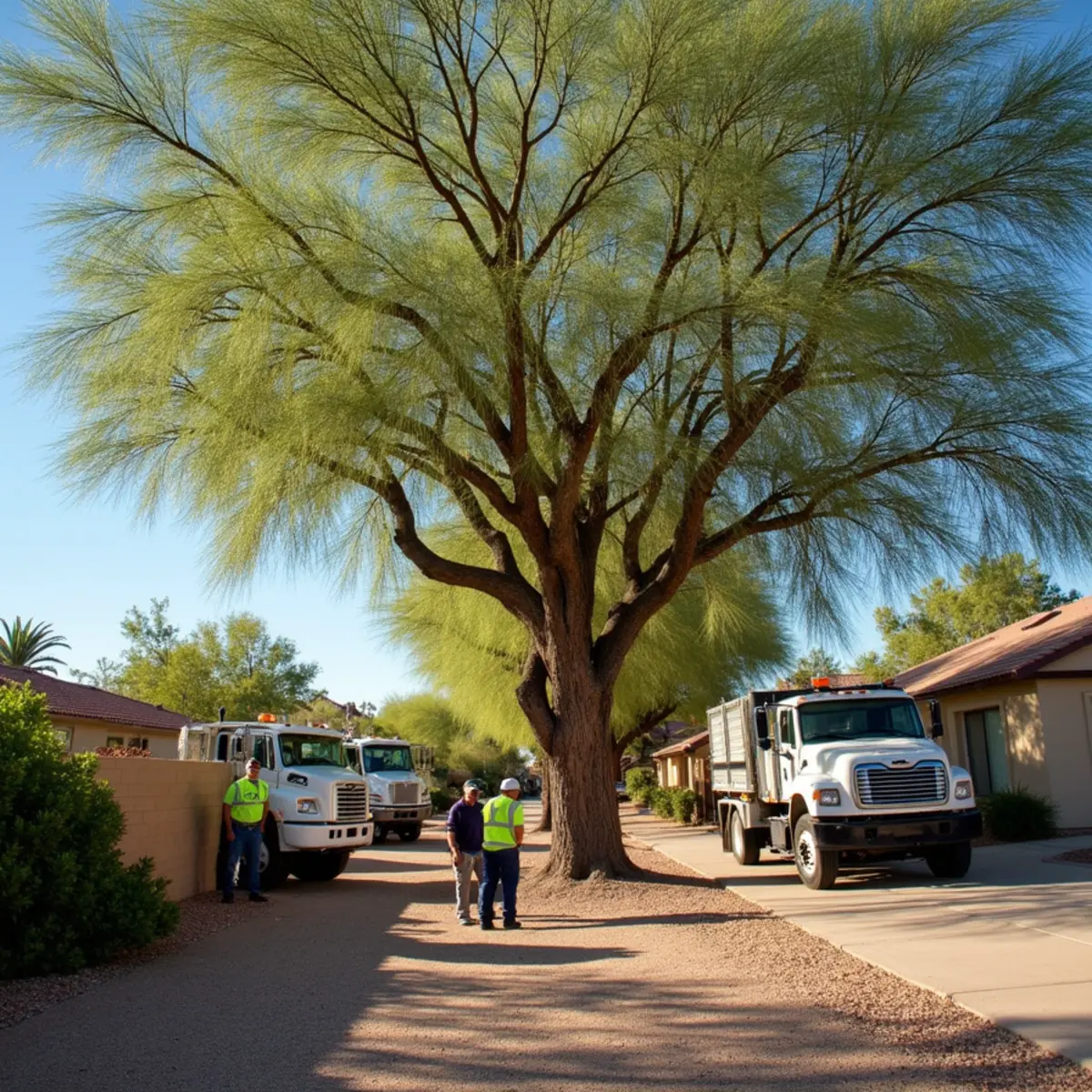
Why palo verde trees are especially prone to windthrow in monsoon storms, and how proper canopy thinning before storm season reduces the risk.
Palo verde trees are Arizona's state tree and one of the most common shade trees across the Valley, but they're also one of the most frequent casualties of monsoon storms. Palo verde tree storm pruning done correctly, before storm season arrives each year, is one of the most effective and least expensive things a homeowner can do to reduce the risk of losing a mature tree — or having it fall onto a house, car, or fence.
Why Palo Verdes Are So Vulnerable to Windthrow
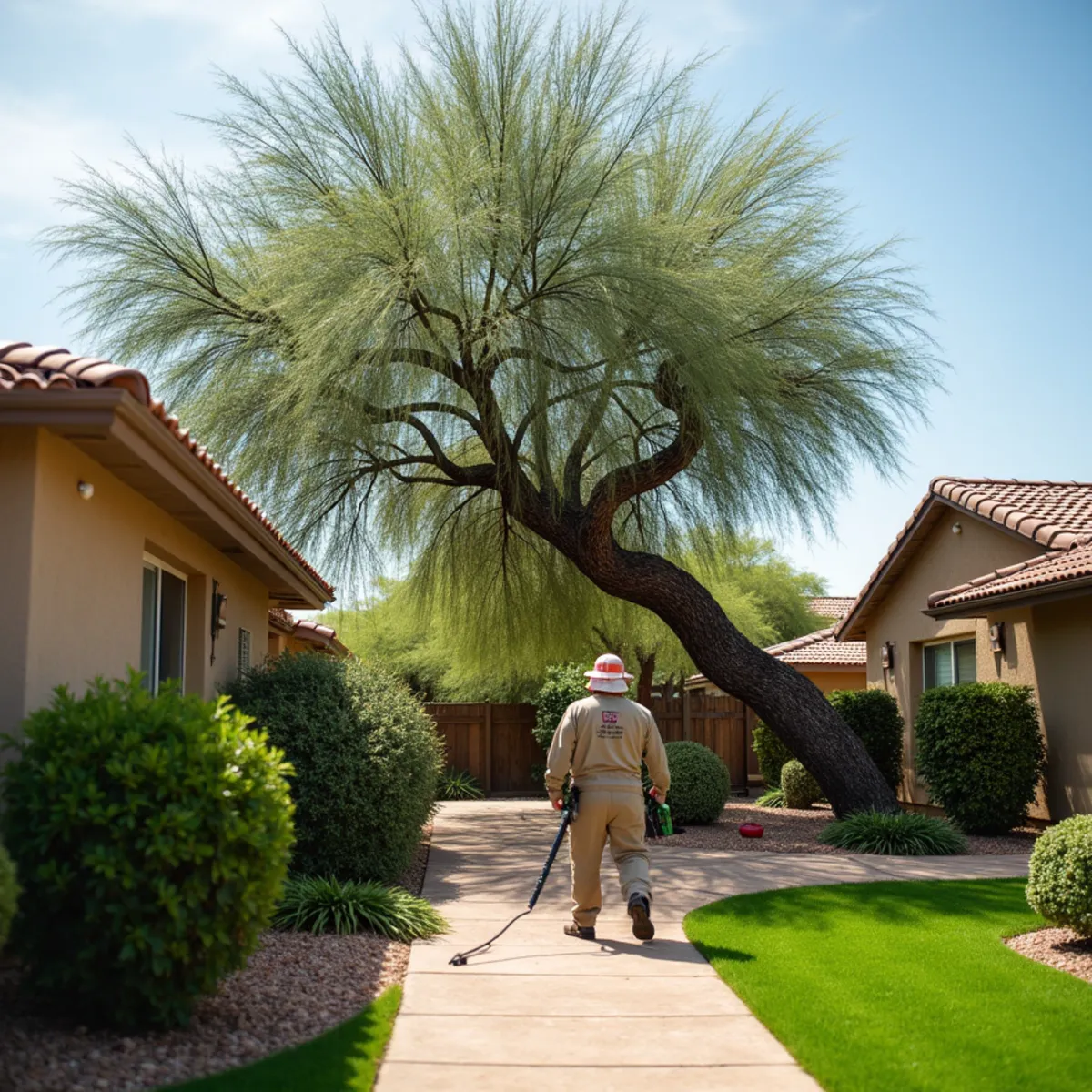
Windthrow — a tree toppling over from wind force rather than snapping mid-trunk — happens when a tree's canopy catches more wind force than its root system can resist. Palo verdes are particularly susceptible for a few overlapping reasons: they grow relatively fast, often producing a dense, wide canopy within a few years; their root systems in shallow, caliche-affected soil don't always anchor as deeply as the canopy size would suggest; and homeowners often let them go years without any structural pruning, letting the canopy get denser and heavier every season.
- Dense, un-thinned canopies catch significantly more wind load than a properly thinned canopy of the same overall size
- Shallow root systems in caliche or compacted soil provide less anchoring resistance than the canopy size might suggest
- Over-irrigated palo verdes (they're adapted to minimal water) can develop weaker wood and faster, more top-heavy growth than trees on a proper desert watering schedule
- Co-dominant trunks (two main trunks of similar size splitting low on the tree) are a common structural weak point that fails first in high wind
What Proper Canopy Thinning Actually Does
The goal of storm-prep pruning isn't to make the tree smaller — it's to let wind pass through the canopy instead of pushing against it like a sail. This is a meaningfully different approach than a general aesthetic trim, and it requires understanding the tree's natural branch structure well enough to remove the right interior and crossing branches without over-thinning, which can actually weaken the tree in a different way.
- Remove dead, damaged, or crossing branches first, since these are both a hazard on their own and add unnecessary canopy density
- Selectively thin interior canopy growth to allow airflow through the tree rather than around it
- Address any co-dominant trunk or weak branch union issues, since these are common failure points regardless of canopy density
- Reduce end-weight on long, unsupported branches without removing so much that the tree's natural form is lost
- Avoid topping (cutting main branches back to stubs), which triggers weak, fast regrowth that's actually more storm-vulnerable than the original growth
Topping a palo verde to reduce its size might look like a storm-prep solution, but it typically backfires — the regrowth is weakly attached and grows back denser and faster than the original canopy, creating a worse wind-catching problem within a couple of seasons.
Timing: When to Thin Before Storm Season
Late spring, roughly April through early June, is the ideal window for storm-prep thinning in the Valley — it's after the risk of frost damage has passed, before monsoon season typically ramps up in late June through September, and before the worst of the summer heat makes extensive pruning work harder on both the tree and the crew. Waiting until a storm is already forecast is too late for anything beyond emergency hazard removal.
Signs a Palo Verde Needs Attention Now
- A noticeable lean, especially if it's new or has increased since the last time you looked closely
- Soil heaving or cracking on one side of the trunk's base, which can indicate root movement
- Co-dominant trunks with a tight, included bark union (where the two trunks meet at a narrow angle without solid wood connection)
- A canopy that's visibly denser than it was a couple of years ago with no pruning in between
- Dead or dying branches scattered through the canopy rather than concentrated in one area
What About Other Desert Trees
Mesquites share many of the same windthrow risk factors as palo verdes — shallow roots, fast growth, and canopy density that builds up without regular thinning. The same storm-prep pruning principles apply, though mesquite wood is somewhat denser and the trees can sometimes handle slightly more canopy load before failing. Either way, an annual pre-monsoon inspection of all mature desert trees on a property is worth the relatively small cost compared to emergency removal and potential property damage after a storm.
Quick tip: walk your property in late spring and look at your trees from a distance, not just up close — a dense canopy silhouette against the sky is often easier to spot from 20 feet away than standing directly underneath the tree.
Schedule Storm-Prep Pruning Before the Next Season
Once monsoon season starts, we're focused on emergency response for trees that have already come down, so the best time to address a vulnerable palo verde is well before the first storm cell of the year. YardGuy4Hire provides palm and cactus trimming along with structural palo verde and mesquite canopy thinning across Mesa and Scottsdale. Call (323) 606-0255 to schedule a pre-monsoon assessment of your trees.
How YardGuy4Hire can help
Frequently Asked Questions
When is the best time of year to thin a palo verde for storm prep?
Late spring, roughly April through early June, is ideal — after frost risk has passed and before monsoon season typically begins in late June.
Will thinning make my palo verde look bare or unnatural?
Properly done selective thinning should preserve the tree's natural form while removing interior density. A skilled crew focuses on structural and safety-relevant cuts rather than an aggressive, obviously altered shape.
Should I stop watering my palo verde to make it more storm-resistant?
Over-irrigation can contribute to weaker wood and faster top growth, so matching irrigation to what a desert-adapted palo verde actually needs (much less than most other landscape plants) is worth reviewing, but this should be part of a broader irrigation assessment rather than simply stopping water abruptly.
How can I tell if my tree has a co-dominant trunk problem?
Look at the base of the canopy for two main trunks of similar size splitting at a narrow angle. A wider, U-shaped union is generally stronger than a tight, V-shaped one where the bark appears pinched between the trunks.
Is storm-prep pruning different from a normal maintenance trim?
Yes, it specifically targets canopy density, wind-catching branch structure, and co-dominant trunk issues, rather than general shaping or aesthetic maintenance.
Trusted Arizona Resources
For water, drought, plant, and licensing guidance, we point Mesa homeowners to the same authoritative sources we rely on:
Need a hand from a local pro?
YardGuy4Hire is a licensed, insured, family-run crew serving Mesa and the whole Valley. Call for a free, honest estimate.
(323) 606-0255