Cost & Insurance
How Much Does Paver Patio & Travertine Pool Deck Installation Cost in Mesa & Phoenix?
By the YardGuy4Hire crew·August 5, 2024·9 min read
Licensed, insured desert landscapers serving Mesa & the Valley since 2018.
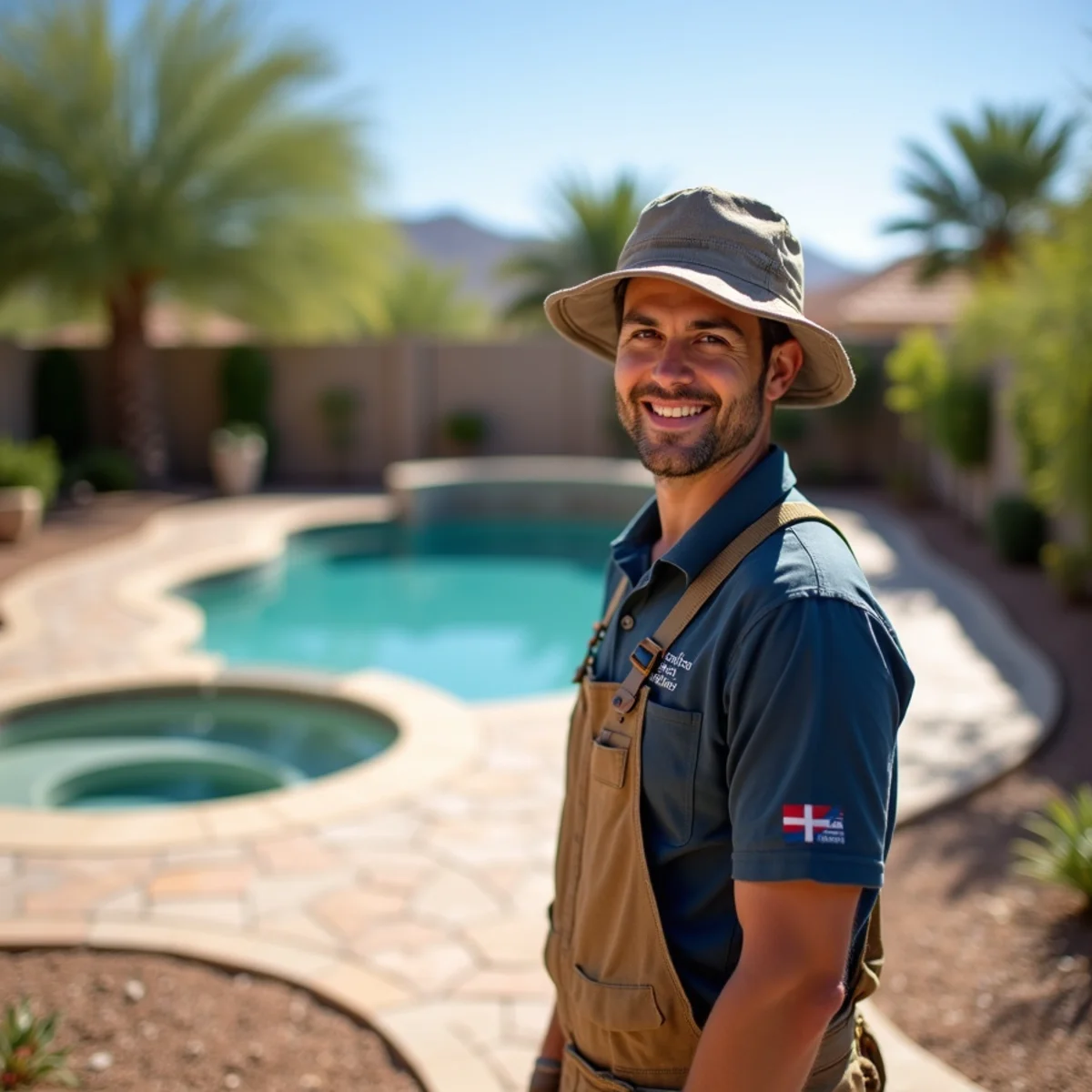
A breakdown of what actually drives paver patio and travertine pool deck pricing in the Phoenix metro, with realistic per-square-foot planning ranges.
If you've started pricing out a paver patio or travertine pool deck in the Phoenix metro, you've probably already noticed the quotes vary a lot — sometimes by a factor of two or more for what looks like a similar-sized project. That spread isn't random. Paver patio cost in Phoenix and Mesa depends on a specific set of site and material factors, and understanding them makes it much easier to compare quotes apples-to-apples instead of just picking the lowest number.
Typical Price Ranges by Material
These are planning-stage estimates based on typical Valley installations. Every yard is different, so treat these as a starting range to budget around, not a fixed quote — actual pricing depends on your specific site conditions, access, and design.
- Concrete pavers (standard patterns): roughly $14-20 per square foot installed
- Premium or large-format concrete pavers: roughly $18-24 per square foot installed
- Travertine pavers (pool decks, entertaining areas): roughly $20-30 per square foot installed
- Flagstone: roughly $16-26 per square foot installed depending on stone type and laying pattern
These ranges include excavation, base preparation, material, and installation labor. They do not include drainage upgrades, retaining walls, demolition of existing concrete, or design fees, which are common add-ons in real Mesa and Phoenix projects.
What Actually Drives the Price
1. Base Preparation and Soil Conditions
This is the single biggest hidden cost variable in Arizona paver projects. A proper base for a paver patio or travertine deck requires excavating down 6-8 inches (more for a driveway), compacting a road-base aggregate layer in lifts, and setting a bedding layer of sand or chip before pavers go down. If your yard sits on caliche — the hard, cement-like calcium carbonate layer common throughout Mesa and the East Valley — that excavation takes significantly more time and sometimes requires jackhammering or specialized equipment, which shows up directly in the quote.
2. Existing Concrete or Turf Removal
Demolishing and hauling away an old concrete slab, or removing grass and irrigation before a new patio goes in, adds cost that's separate from the paver installation itself. Get clarity from any contractor on whether demo and haul-off are included in the quoted price.
3. Pattern, Border, and Cutting Complexity
A running-bond pattern with a simple soldier-course border is faster to install than a herringbone pattern with a contrasting border and curved edges around a pool. More cuts mean more labor and more waste, which increases the per-square-foot cost even when the material itself is the same.
4. Drainage Design
A patio or pool deck that isn't sloped correctly away from the house, or that doesn't account for where monsoon runoff needs to go, will develop puddling and settling problems within a year or two, no matter how nice the pavers look on installation day. Proper drainage planning — sometimes including a channel drain at the edge of the deck — is worth paying for even though it adds to the upfront cost.
5. Pool Deck-Specific Factors
- Coping (the edge pieces right at the pool's edge) is typically priced separately and at a higher rate than field pavers
- Travertine near a pool is usually specified in a tumbled, textured finish for slip resistance, which costs more than a honed finish
- Sealing is often recommended for travertine pool decks to reduce staining from pool chemicals and sunscreen, and is usually quoted as an add-on
How to Compare Quotes Fairly
- Confirm each quote includes the same base depth and compaction spec, not just a square-foot price
- Ask whether demo, haul-off, and drainage are included or itemized separately
- Check whether the quote specifies paver thickness and manufacturer, since thinner or off-brand pavers cost less but perform worse over time
- Ask about the paver edge restraint method — a proper edge restraint prevents pavers from spreading and settling at the perimeter
- Get the warranty terms in writing, including what's covered if pavers settle or shift within the first year
A quote that's dramatically lower than the others is worth a second look — it usually means shallower base depth, no compaction testing, or thinner pavers, all of which show up as settling and cracking within a year or two in Arizona's expansive-then-compacting soil cycle.
Get an Accurate Quote for Your Yard
Because soil conditions and design complexity vary so much from yard to yard across Mesa and Scottsdale, the only way to get a truly accurate number is a site visit. YardGuy4Hire installs paver patios and travertine pool decks throughout the Phoenix metro and will walk you through exactly what's driving your specific quote, line by line. Call (323) 606-0255 to schedule a free on-site estimate.
How YardGuy4Hire can help
Frequently Asked Questions
Is travertine or concrete paver better for a pool deck in Arizona?
Travertine stays noticeably cooler underfoot in direct sun compared to most concrete pavers, which is a major reason it's popular for Arizona pool decks despite the higher cost. Concrete pavers are more budget-friendly and come in a wider range of colors and patterns.
How long does a typical paver patio installation take?
A standard residential patio usually takes 3-7 days from excavation to finished joint sand, depending on size, base conditions, and pattern complexity. Caliche soil or extensive demo can add time.
Do I need a permit for a paver patio in Mesa?
Permit requirements vary by city and project scope, especially if the patio includes a covered structure or affects drainage near a property line. Check with the local building department or ask your contractor to confirm before work starts.
Why did my old patio settle or crack after a few years?
Settling is almost always a base preparation issue — insufficient excavation depth, poor compaction, or no edge restraint. It's one of the most common problems we're called to fix and rebuild correctly.
Can pavers be installed over an existing concrete slab?
In some cases, yes, using a mortar-set or sand-set method over sound concrete, but it depends on the slab's condition and existing drainage slope. A site visit is the best way to confirm if this is an option for your project.
Trusted Arizona Resources
For water, drought, plant, and licensing guidance, we point Mesa homeowners to the same authoritative sources we rely on:
Need a hand from a local pro?
YardGuy4Hire is a licensed, insured, family-run crew serving Mesa and the whole Valley. Call for a free, honest estimate.
(323) 606-0255