Core Service Problem-Solving
Preventing Sunken Pavers: How Proper Base Compaction Resists Arizona Monsoon Settling
By the YardGuy4Hire crew·October 28, 2024·8 min read
Licensed, insured desert landscapers serving Mesa & the Valley since 2018.
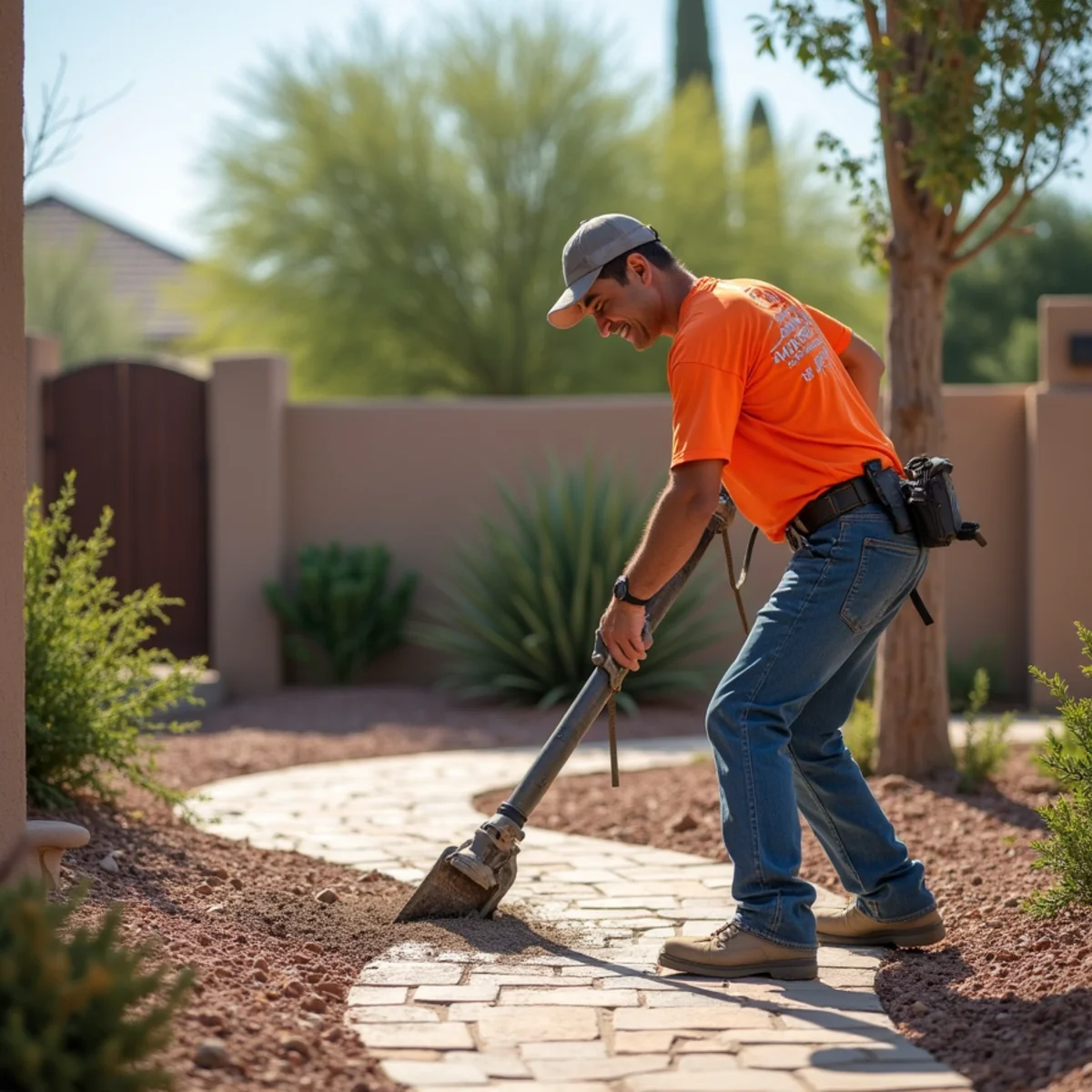
Why paver patios settle and sink after Arizona monsoon storms, and the base preparation and compaction techniques that actually prevent it long-term.
If sections of your paver patio have started dipping, rocking underfoot, or pulling apart at the joints, especially after a heavy monsoon season, the root cause almost always traces back to what's underneath the pavers, not the pavers themselves. Preventing paver settling in Arizona comes down almost entirely to base preparation and compaction, done correctly the first time, because there's no amount of joint sand or polymeric sealer that fixes a base that wasn't built right.
Why Pavers Sink in the First Place
A paver system is really three layers working together: the compacted subgrade (native soil), a compacted aggregate base course, and a thin bedding layer of sand or chip that the pavers sit on. If any of those layers isn't compacted to spec, water infiltration — especially the kind of sudden, heavy rain a monsoon storm delivers — washes fines out of the base or allows loose material to settle under load, and the pavers above simply follow it down.
The Most Common Failure Points
- Insufficient base depth — many DIY or corner-cutting installs skimp on the 4-6+ inch compacted aggregate base a patio actually needs
- Base compacted in one thick lift instead of multiple thinner lifts, which leaves the middle of the layer under-compacted even when the surface looks solid
- Missing or inadequate edge restraint, letting pavers spread outward under load and lose the interlock that keeps the whole system rigid
- Poor surface drainage, letting water pond on the patio and infiltrate through joints repeatedly instead of sheeting off
- Base material that includes too many fines (silty material) rather than a proper crushed aggregate blend, which doesn't compact or drain as well
A patio that looks perfect on installation day but wasn't compacted properly often doesn't show problems until the first real monsoon season stress-tests it — which is exactly why base quality matters more than how the surface looks at handoff.
How Proper Compaction Actually Works
- Excavate to the correct depth for the intended use (patios need less depth than a driveway that will see vehicle loads)
- Compact the native subgrade soil first, since a soft subgrade undermines everything built on top of it
- Add the aggregate base material in lifts of roughly 2 inches at a time, compacting each lift with a plate compactor before adding the next
- Screed a thin, consistent bedding layer of sand or chip on top of the compacted base
- Install pavers, then compact the finished surface with a plate compactor (with a protective pad) to seat them and lock in polymeric or regular joint sand
In Arizona specifically, base material selection matters as much as the compaction process. A crushed aggregate base with the right gradation (mix of particle sizes) compacts into a dense, interlocking layer that resists both settling under load and erosion from monsoon runoff. Skipping the multi-lift compaction step is one of the most common shortcuts we see on failed installs, since it's invisible until months later when the middle of the base finally settles under repeated wetting and drying cycles.
Why Monsoon Season Specifically Exposes Bad Bases
A poorly compacted base can look fine through months of light irrigation overspray or occasional light rain, and then fail visibly after the first serious monsoon downpour. The sudden volume of water finds any weak spot in the base — a section that wasn't fully compacted, a spot where fines migrated, or an edge without proper restraint — and either washes material out or causes a rapid settling event. This is why so many sunken-paver service calls come in during and right after monsoon season specifically.
Fixing an Already-Sunken Paver Area
Repairing settled pavers correctly means more than just lifting the low pavers and adding sand underneath — that's a short-term patch that tends to fail again quickly. A proper repair involves pulling up the affected pavers, excavating down to find and fix the actual base problem (often re-compacting or adding properly graded aggregate), and then resetting the pavers with correct bedding and edge restraint.
- Pull affected pavers and inspect the base for washout, poor compaction, or missing edge restraint
- Re-compact or rebuild the base to spec rather than just adding sand under the low spot
- Check and repair or add edge restraint if it was missing or damaged
- Reset pavers with a properly screeded bedding layer and re-sand the joints
- Confirm the surrounding grade still sheds water away from the repaired area
If only one small section of a patio has settled, it's worth having the whole patio's edge restraint and drainage checked at the same time — a localized failure is often an early warning sign for the rest of the installation.
Get It Built Right the First Time
Whether you're planning a new paver patio or dealing with settling from a previous install, base preparation is the part of the job that determines whether your patio lasts five years or twenty-five. YardGuy4Hire builds paver patios and travertine decks across Chandler and Fountain Hills with proper multi-lift compaction and edge restraint on every job, and we also repair settled pavers from other installers. Call (323) 606-0255 for an assessment or a new project quote.
How YardGuy4Hire can help
Frequently Asked Questions
How long after installation should pavers stay level before settling is a concern?
A correctly installed paver patio should remain stable for years with only minor, even wear. Noticeable dipping or rocking within the first year or two, especially after a monsoon season, typically points to a base preparation issue.
Can sunken pavers be fixed without redoing the whole patio?
Often yes, if the problem is localized. The affected section can be pulled up, the base corrected, and the pavers reset without touching the rest of the patio, as long as the surrounding area's base is sound.
Does edge restraint really make a noticeable difference?
Yes, edge restraint keeps the perimeter pavers from spreading outward under load, which maintains the interlock across the whole field. Missing or failed edge restraint is a very common cause of gradual widening joints and eventual settling.
Why do pavers seem to settle more after monsoon season specifically?
Heavy, sudden rainfall stress-tests the base more than routine irrigation or light rain. Any weak spot in compaction or drainage tends to show up as visible settling after the first serious storm.
What base depth do you recommend for a standard Arizona patio?
For pedestrian-use patios, a compacted aggregate base of roughly 4-6 inches is typical, though it can vary based on native soil conditions and drainage design. Vehicle-rated areas need significantly more.
Trusted Arizona Resources
For water, drought, plant, and licensing guidance, we point Mesa homeowners to the same authoritative sources we rely on:
Need a hand from a local pro?
YardGuy4Hire is a licensed, insured, family-run crew serving Mesa and the whole Valley. Call for a free, honest estimate.
(323) 606-0255