Emergency Guides
Commercial Monsoon Debris Response: Keeping East Valley Business Parks & Lots Safe
By the YardGuy4Hire crew·July 22, 2024·8 min read
Licensed, insured desert landscapers serving Mesa & the Valley since 2018.
A property manager's guide to fast, liability-conscious monsoon debris cleanup for East Valley business parks, retail centers, and commercial lots.
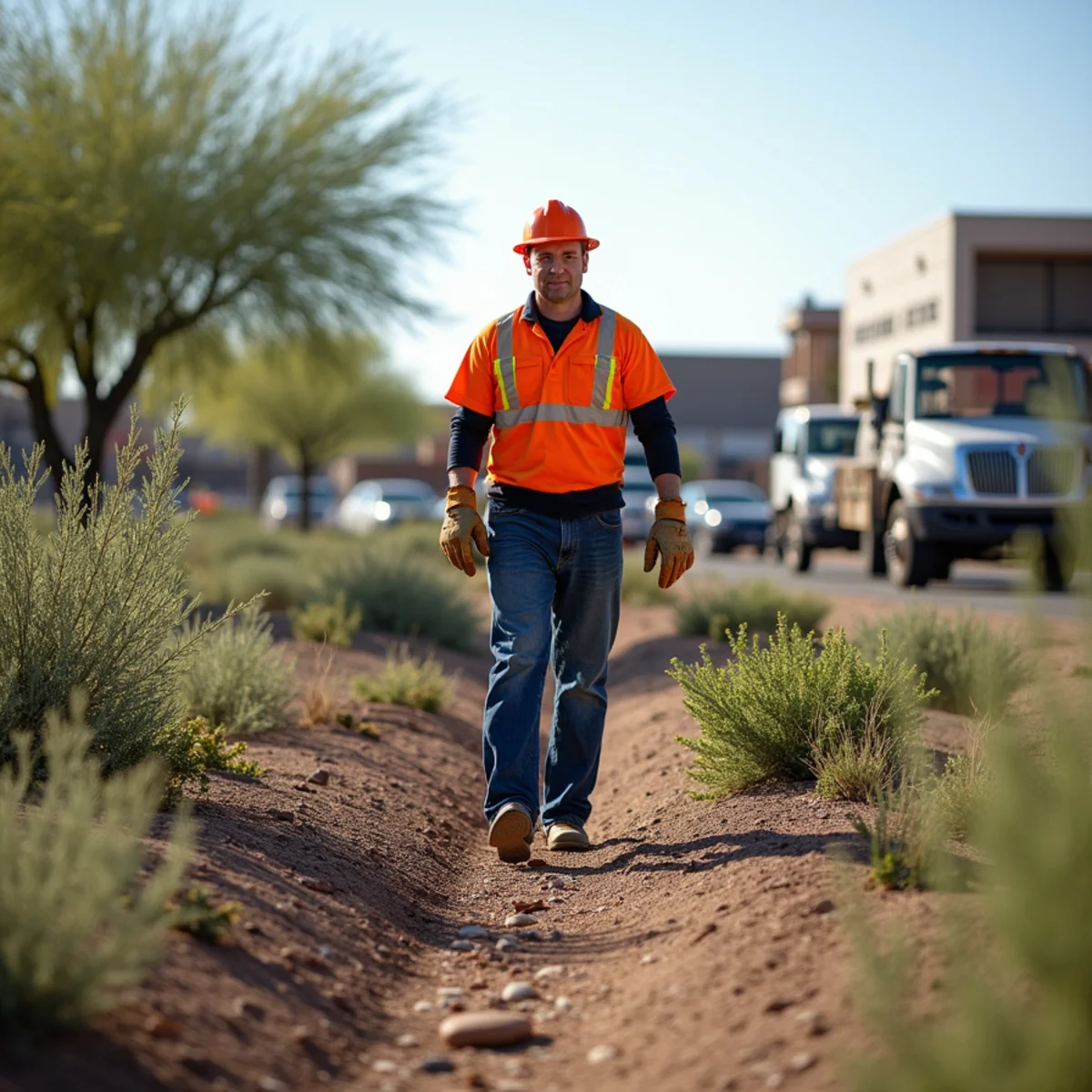
For property managers running business parks, retail centers, and multi-tenant lots across Mesa and Tempe, a monsoon storm isn't just a landscaping inconvenience — it's a liability exposure. Downed branches in a parking lot, debris blocking a fire lane, or standing water pooling near a tenant entrance all create risk the moment tenants and customers start arriving the next morning. Fast, well-documented commercial monsoon cleanup is one of the highest-leverage things a property manager can arrange before storm season even starts.
What Makes Commercial Monsoon Cleanup Different
Residential storm cleanup is about restoring one yard. Commercial monsoon cleanup in a business park or retail lot has to account for tenant access, fire lane clearance, ADA path compliance, parking lot drainage, and often multiple stakeholders (property owner, management company, individual tenants) who all need the same information at once. A single downed tree limb in the wrong spot can block a loading dock, damage tenant signage, or create a trip-and-fall claim if it's not addressed before the property opens.
Priority Order for Commercial Sites
- Fire lanes, emergency vehicle access, and any blocked exits — clear these first, always
- ADA-compliant paths, ramps, and accessible parking spaces
- Main drive aisles and primary customer parking areas
- Standing water near entrances or walkways that creates a slip hazard
- Perimeter and landscaped island cleanup, signage, and irrigation checks
Document everything before cleanup begins. Time-stamped photos of debris, standing water, and any damaged fixtures protect the property owner if a tenant or visitor files a claim related to the storm.
Common Monsoon Damage on Commercial Lots
- Downed or split ornamental trees in parking lot islands and entrance beds
- Wind-scattered gravel and decomposed granite from planter beds onto walkways and drive aisles
- Clogged catch basins and area drains causing pooling near building entrances
- Damaged or knocked-over monument signage and landscape lighting
- Broken irrigation lines in common areas that flood a section of the lot
Building a Rapid-Response Plan Before Storm Season
The property managers who handle monsoon season with the least disruption are the ones who have a standing commercial grounds maintenance relationship in place before June, not after the first big storm. Waiting until debris is already blocking a fire lane to start calling around for a vendor means longer response times exactly when speed matters most.
- Confirm your grounds maintenance vendor offers after-hours or weekend storm response, not just scheduled visits
- Get a written understanding of response time expectations during active monsoon season
- Walk the property with your vendor before storm season to flag weak trees, undersized drains, and other likely failure points
- Keep a simple call tree so tenants know who to report storm damage to, rather than each tenant calling a different contractor
Coordinating With Multiple Tenants
In a multi-tenant business park, storm debris rarely respects lease-line boundaries. A tree that falls in a common area might drop debris onto an individual tenant's dedicated parking, or a drainage failure in one tenant's landscaped bed might send water toward another tenant's entrance. Clear communication about who's responsible for what — common area versus tenant-maintained space — before the storm hits prevents finger-pointing afterward and speeds up the actual cleanup, since the crew isn't waiting on a decision about scope while debris sits in a fire lane.
What to Include in Vendor Communication
- Exact location and nature of the hazard (blocking fire lane, near main entrance, tenant parking, etc.)
- Whether the area needs immediate hazard mitigation versus full cleanup
- Any tenant-specific concerns, like a restaurant needing its patio cleared before opening
- Photos, if possible, to help the crew arrive prepared with the right equipment
Insurance and Liability Considerations
Commercial general liability policies typically expect a property owner to act reasonably promptly to address known hazards. A parking lot with visible storm debris that sits for days before cleanup, followed by a slip-and-fall or vehicle damage claim, is a weaker position than one where cleanup was documented as starting the same day. This isn't legal advice — property managers should review their specific coverage with their insurer or risk management team — but timely, documented response is consistently in the property's interest regardless of the specific policy language.
A same-day hazard mitigation visit, even if full cleanup takes another day or two, is often enough to demonstrate reasonable care while the rest of the debris is cleared.
Get a Storm-Ready Grounds Maintenance Plan
YardGuy4Hire provides commercial monsoon debris response and ongoing commercial grounds maintenance for business parks, retail centers, and multi-tenant properties across Mesa and Tempe. We work with property managers to set up before-storm-season site walks and after-hours response protocols so debris doesn't sit in a fire lane waiting for a Monday morning phone call. Call (323) 606-0255 to talk through a maintenance contract or get emergency debris cleared today.
How YardGuy4Hire can help
Frequently Asked Questions
How fast can you respond to a commercial property after a monsoon storm?
We prioritize hazard-mitigation calls for fire lanes, entrances, and drive aisles during active storm season and can typically dispatch a crew the same day for East Valley business parks.
Do you work directly with property management companies, not just individual tenants?
Yes, most of our commercial monsoon response work is coordinated directly with property managers or management companies who oversee multi-tenant sites.
Can you set up a standing maintenance contract that includes storm response?
Yes. Many of our commercial grounds maintenance contracts include after-hours storm response as part of the scope, so there's no separate vendor search needed when a storm hits.
What should we photograph before cleanup starts?
Time-stamped, wide-angle photos of debris locations, any standing water, damaged signage, and blocked access points, taken before anything is moved, give the property the best documentation if a claim comes up later.
Do you handle drainage issues, not just debris removal, on commercial lots?
Yes, our commercial teams assess catch basins, area drains, and grading as part of storm response, since pooling water is often as urgent as fallen debris.
Trusted Arizona Resources
For water, drought, plant, and licensing guidance, we point Mesa homeowners to the same authoritative sources we rely on:
Need a hand from a local pro?
YardGuy4Hire is a licensed, insured, family-run crew serving Mesa and the whole Valley. Call for a free, honest estimate.
(323) 606-0255